


Hanover, PA
Hanover Furnace Repair and AC Service
We diagnose and repair furnaces and central AC systems in Hanover and nearby communities. With a median home age of 1954, our technicians expect older basements, altered ducts, and varied venting conditions.
We service Hanover homes, including older systems and ductwork dating to a 1954 median build year.
- Licensed & Insured
- Satisfaction Guaranteed
- From Gettysburg to New Freedom
- Serving 12 communities in York, Carroll and Adams counties12 communities
- Residential furnace repair in Hanover and nearby townsResidential furnace repair
- Phone us to schedulePhone us to schedule
- Covering 12 ZIP codes around Hanover12 ZIP codes

Hanover, PA
HVAC Work Grounded in Hanover Homes
We work on Hanover homes and travel through Penn Township, West Manheim Township, McSherrystown, Spring Grove, Littlestown, and nearby service areas. January averages 30.2°F at the NOAA Hanover 4 SW station, so a furnace fault can affect more than comfort. Older construction also changes the visit: our technicians inspect access, flue routing, supply runs, returns, and basement conditions before choosing a repair. Local heating fuel data shows utility gas is common, but propane, electricity, and fuel oil also appear in occupied homes. We use the equipment and fuel information we find at the property, not assumptions from neighborhood averages.
- Gas, propane, and oil furnace service
- Central AC diagnosis and replacement
- Existing duct system evaluations
- Hanover permit and inspection guidance
Why neighbors call us
Why Our Hanover Visits Start With Context
A winter call in Hanover may involve the furnace, its fuel supply, the duct layout, or the house around it. Our team tests each part in the setting where it operates.
Older homes need broader checks
Hanover homes have a median construction year of 1954. In basements and utility areas, we trace airflow, access, venting, and connections before choosing a repair.
We identify the heating fuel
Utility gas supplies the main heating fuel for 77.2% of occupied homes, but Hanover also has propane, electric, and oil-heated homes. Fuel changes the test sequence.
Winter demand matters
The NOAA station near Hanover records 5,397 annual heating degree days. We look at ignition, controls, airflow, and cycling so the system can carry its seasonal load.
Summer faults leave clues
Hanover records 904 annual cooling degree days. We follow the central AC sequence from the thermostat through airflow, electrical parts, condensate handling, and outdoor operation.
Borough review is part of planning
Replacement work in Hanover passes through the Borough Department of Code Enforcement for local permit and inspection handling. We include that step when explaining the job.
We travel the roads around town
PA 94, PA 194, and PA 116 meet at Hanover's square, with PA 216 branching toward Codorus State Park. Those routes guide our visits across nearby communities.
Services
Heating and Cooling Services for Hanover Homes
The first cold snap exposes heating faults, while humid July afternoons test central AC capacity. We work on existing residential systems in Hanover and the surrounding towns, with each visit tied to the equipment and the house.
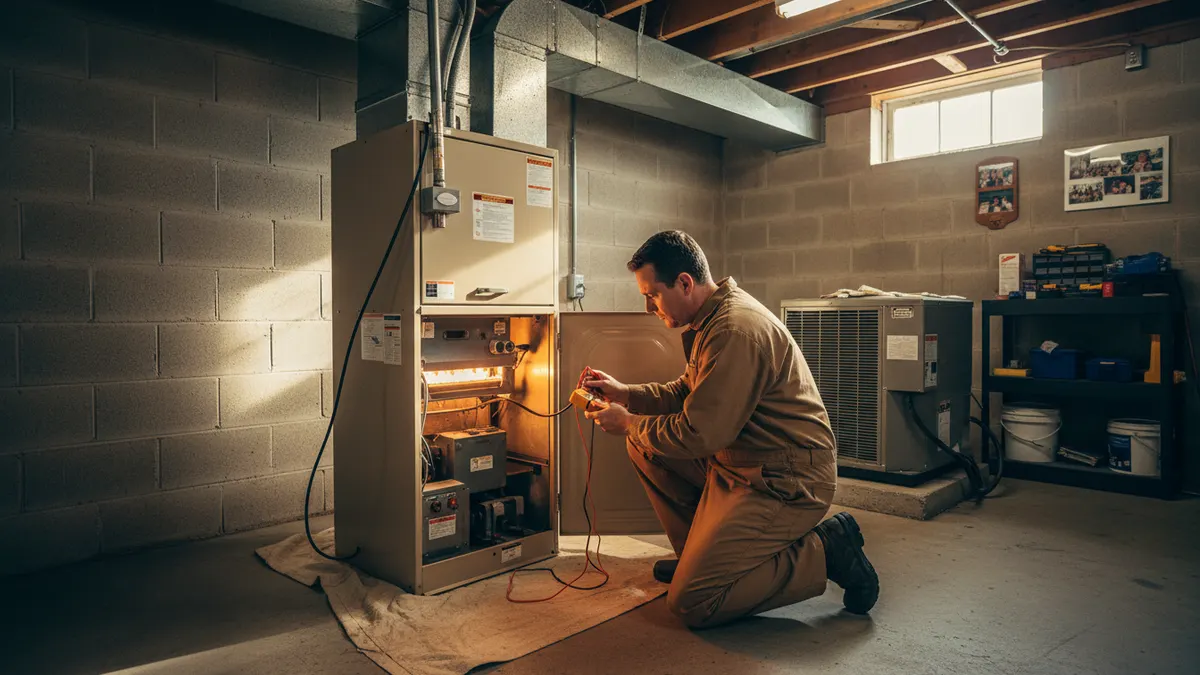
Furnace Repair
We diagnose gas, propane, and oil forced-air furnace faults, from ignition trouble to blower and thermostat problems in Hanover's older homes.
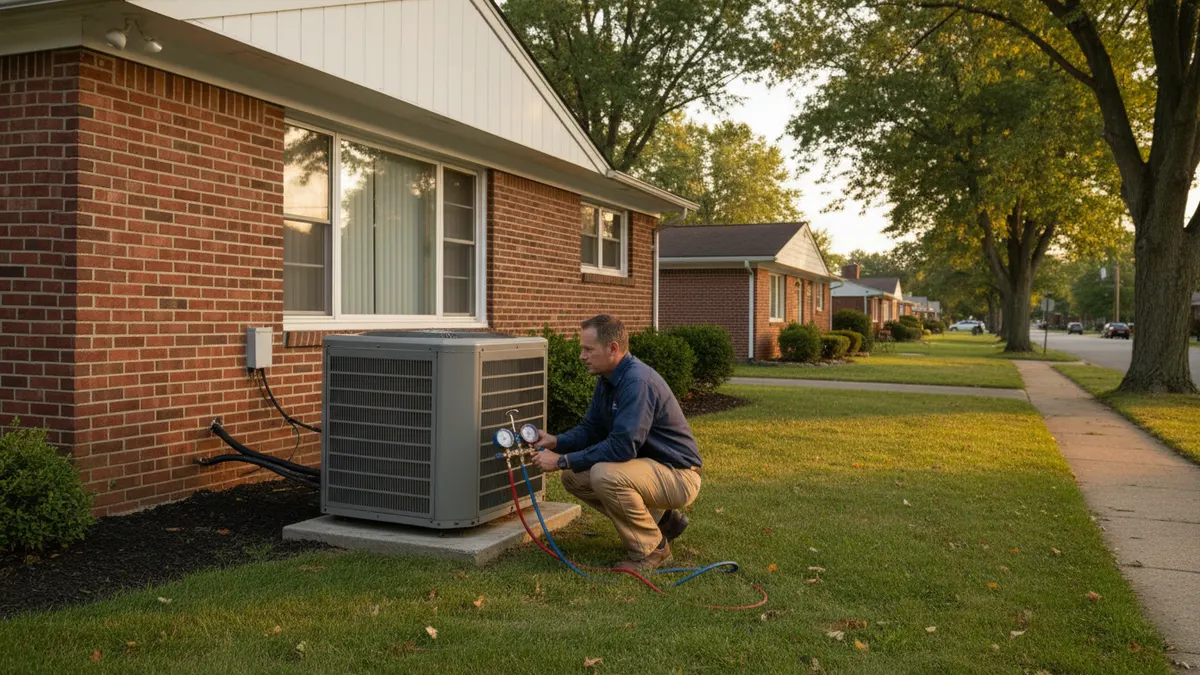
AC Repair
We troubleshoot central AC that will not cool, including coil freeze-ups, refrigerant concerns, electrical parts, outdoor fans, and condensate drainage.
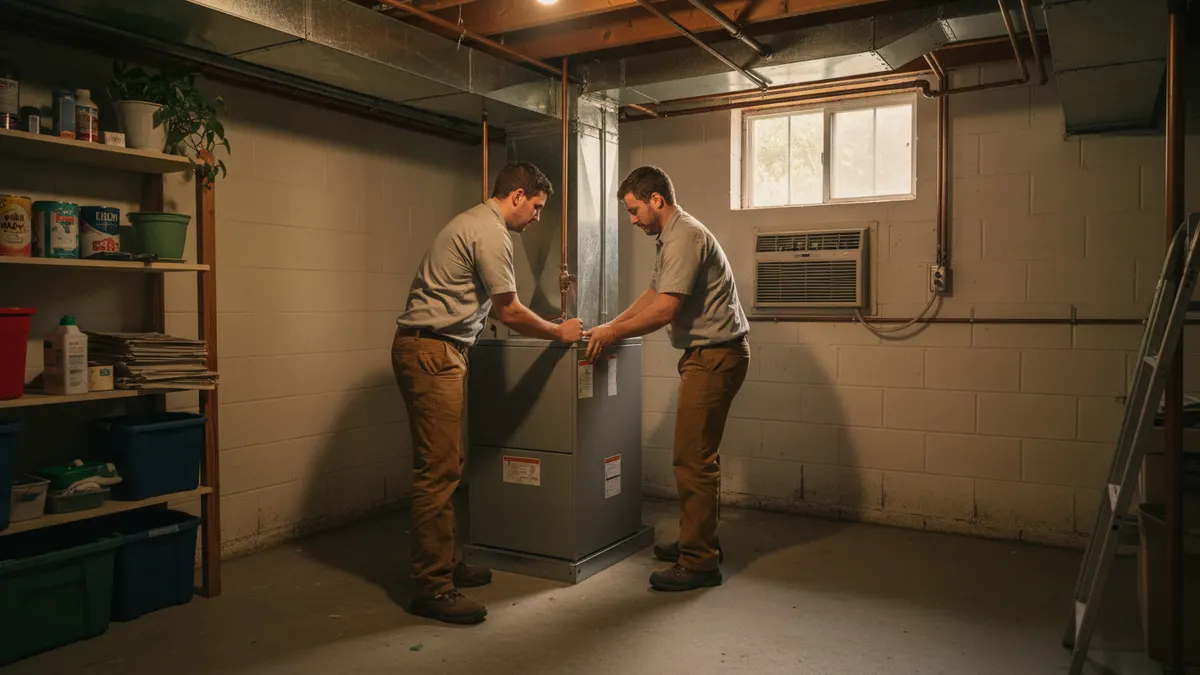
Furnace Replacement
We replace an existing gas, propane, or oil forced-air furnace, size it for the home, and address the permit path when Hanover requires one.
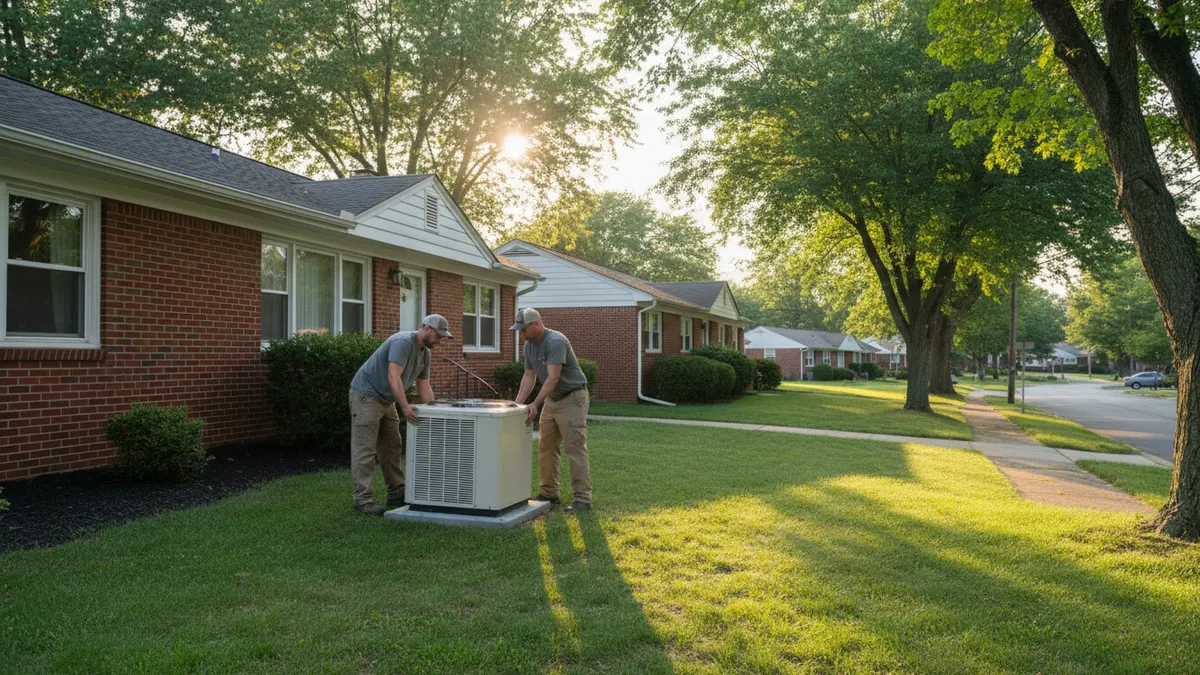
AC Replacement
We replace a central AC outdoor unit and matching indoor coil on an existing duct system, with sizing suited to Hanover's summer demand.
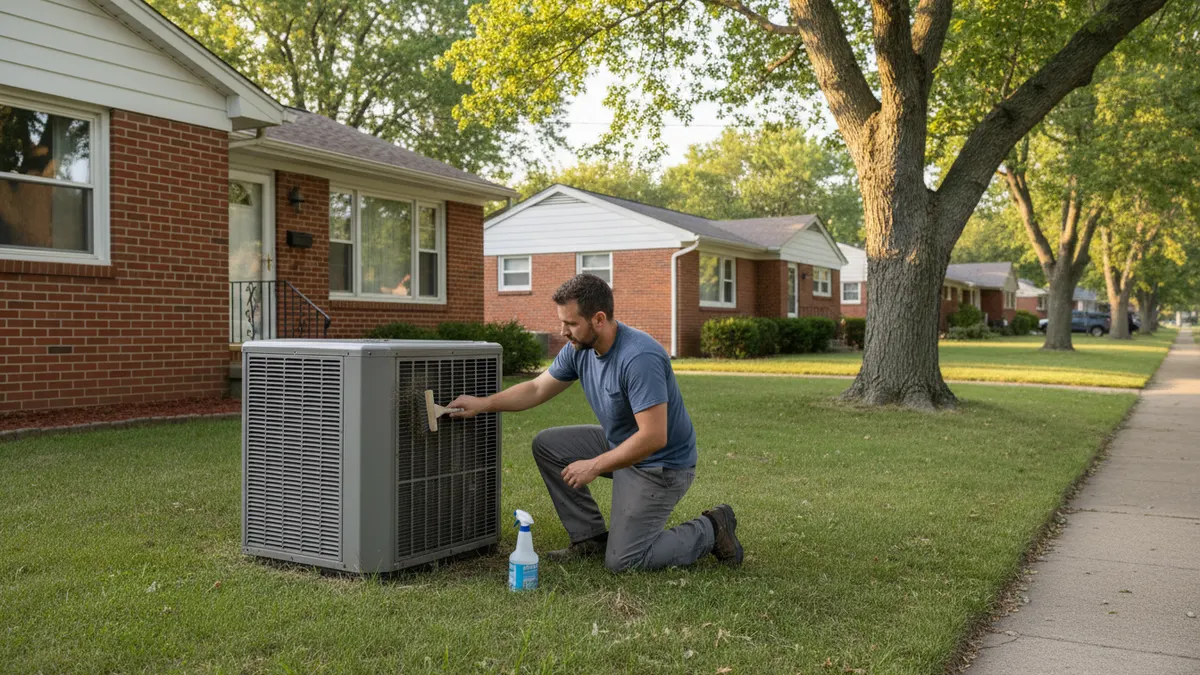
Furnace and AC Tune-Ups
We clean and test furnaces and central AC systems before heavy seasonal use, useful for homes facing Hanover's cold winters and warm summers.


Our process
What Happens During the Visit
A first cold snap or humid afternoon gives us a useful starting symptom. Our team then works from the home's conditions, local fuel service, and the repair or replacement scope.
Step 1
We record the symptom
We begin with what happened, when it started, and how the system responded. The fuel type and equipment location help us choose the first checks.
Step 2
We inspect the installation
Our technician examines the furnace or central AC along with accessible returns, supplies, controls, drainage, venting, and electrical connections. Older Hanover homes can hide changes in basements.
Step 3
We explain the work
We identify the confirmed fault or replacement need, separate required work from optional improvements, and describe parts, access, duct conditions, and the applicable Hanover permit path.
Step 4
We test the completed job
After the work, we operate the system through its sequence and verify airflow, temperature response, safety controls, and drainage as applicable. We review what changed before leaving.
Pricing factors
What Shapes the Service Cost
Hanover sits beside the York County and Adams County boundary, while Penn Township surrounds the borough on three sides. Homes across those edges differ in access, equipment, and duct conditions, so the scope determines the price.
Before any work begins, we go over the scope and the price with you.
The confirmed fault
A failed ignitor, blower issue, control problem, frozen coil, or drain obstruction requires its own tests and parts. We price from the verified cause, not just the symptom.
Fuel and equipment design
Gas, propane, and oil forced-air furnaces do not use identical controls or service procedures. The installed fuel and model determine the diagnostic work.
Room to reach the system
Basement stairs, finished rooms, crawl spaces, and tight utility areas affect removal, part handling, and installation labor. Existing clearances can change the job sequence.
Condition of the duct system
Disconnected branches, restricted returns, altered registers, and poor airflow can require additional work when existing ducts must serve repaired or replaced equipment.
Replacement sizing and matching
A replacement depends on the home's measured needs and the existing duct layout. For central AC, the outdoor condenser and indoor coil must also be matched.
Permit and inspection steps
Hanover's Borough Department of Code Enforcement handles local permit and inspection activity. The required review adds planning steps when replacement work changes the mechanical system.
Local housing
Hanover Conditions We Plan Around
These local figures help explain why we inspect both the equipment and the home around it before recommending a repair or replacement.
1954
Median year built
A 1954 median build year points us toward careful basement, duct, and venting inspections.
30.2°F
January average
A 30.2°F January average makes furnace sequence and airflow checks important during winter visits.
77.2%
Heat with utility gas
Utility gas serves 77.2% of occupied homes, but fuel type still must be verified at each property.
74.6°F
July average
A 74.6°F July average supports checking central AC capacity, airflow, coils, and condensate control.
Sources: U.S. Census Bureau, ACS 2023 5-year estimates; NOAA 1991-2020 climate normals
Where we work
Find Your Town on Our Service Map
Our service area starts in Hanover and reaches homes in York County, Adams County, and Carroll County. Look for your community, including Spring Grove, Gettysburg, or Manchester, then contact our team about the system at your address.
FAQ
Hanover HVAC Questions, Answered
Do I need a permit to replace a furnace or central AC in Hanover?
Pennsylvania's Uniform Construction Code generally requires a permit before installing, altering, repairing, removing, converting, or replacing a regulated residential mechanical system. Emergency equipment replacement has a different rule: the application must reach the building code official within 3 business days. We help identify the applicable Hanover process before work begins.
Who handles HVAC permits and inspections for Hanover?
Hanover uses the Borough Department of Code Enforcement as its outside code agency for permits and inspections. We account for that office when planning furnace or central AC replacement. The permit requirement comes from Pennsylvania's Uniform Construction Code, while the local office handles the borough's review and inspection process.
Does the age of homes in Hanover change how you approach heating repairs?
Yes. Hanover's median home construction year is 1954, and 79.5% of homes were built before 1980. We therefore inspect equipment access, return paths, supply branches, venting, and electrical connections instead of assuming the visible furnace fault is isolated from the surrounding installation.
My house was built before 1980. What should you check on the duct system?
We check whether return openings are adequate, supply runs remain connected, joints are accessible, and registers receive usable airflow. We also look for changes made around finished basements or remodeled rooms. Older duct layouts can limit a replacement even when the furnace or central AC itself is correctly selected.
How long should a furnace last through Hanover winters?
Service life depends on the furnace design, fuel, installation, maintenance, operating cycles, and condition of nearby ductwork. Hanover records 5,397 annual heating degree days, so equipment sees regular seasonal demand. We assess heat exchanger condition, controls, airflow, ignition, and repair history before discussing continued service or replacement.
When is the best time to book a furnace tune-up in Hanover?
Book a tune-up before regular winter heating demand begins, so the technician can clean the furnace, test its operating sequence, inspect airflow, and identify worn controls. Hanover's January average is 30.2°F, and the local climate records 5,397 annual heating degree days. Early testing gives you more information before a cold-weather fault.
Plan the Next HVAC Visit
Our team can review the system, explain the local permit and inspection steps, and schedule the work for your Hanover home or nearby community.
Hanover, PA 17331